There's a pole near the lifeguard stand at Siesta Key Beach with a colored flag on it, and I'd guess most people never look at it twice. It's not decoration. Florida beaches use a standard color system to tell you how the water actually is that day, and it changes — the flag you saw last summer might not be the one flying when you show up.
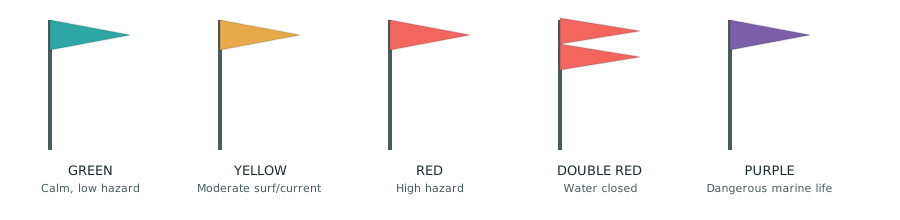
The five flag colors you'll see on Florida beaches, Siesta Key included.
The colors, plainly
Green means calm conditions, low hazard. This is the "go ahead and swim" flag.
Yellow means moderate surf or currents. Still swimmable for most people, but worth being more careful, especially with kids or weaker swimmers.
Red means high hazard — strong surf or rip currents. This is where a lot of visitors underestimate things, because the water can look totally normal from the sand while still being genuinely dangerous to swim in.
Double red means the water is closed to the public. Not a suggestion — this one's a hard no.
Purple flies alongside any of the above and means dangerous marine life — jellyfish or similar — is present. It doesn't replace the color flag, it stacks with it.
Why this matters more than it seems
Rip currents are the actual hazard hiding behind a lot of "the beach looked calm" stories. They can form on a day that otherwise looks fine, and they're strong enough to pull even confident swimmers away from shore fast. The flag system exists because you can't reliably eyeball this from the sand — lifeguards are reading conditions you're probably not trained to notice.
If you ever get caught in one
Don't swim straight back toward shore against it — you'll exhaust yourself fighting a current that's stronger than you are. Swim parallel to the shore instead, until you're out of the pull, then head in. If you can't get out of it, wave for a lifeguard's attention rather than continuing to fight it alone.
Combine this with checking red tide conditions before you head out — between the two, you've covered the water-safety basics that actually matter here, not just the sand and parking side of planning.
Frequently asked questions
What does a red flag mean at Siesta Key Beach?
High hazard — strong surf or rip currents. The water can look calm while still being genuinely dangerous to swim in.
What should I do if I'm caught in a rip current?
Swim parallel to the shore instead of straight back to the beach, until you're out of the pull, then head in. Wave for a lifeguard if you can't get free.
Does the flag change during the day?
Yes — conditions can shift with the wind, so it's worth checking the flag again later in the day rather than assuming the morning flag still applies.
Keep planning